Hacks and more - Energy saving projects
Energie- und Umwelt-Consulting

Blog

Blog
Here you find some of the private initiatives. Since DIY creates risks, some warnings are issued too. Be inspired and improve your ecological footprint too:
1990ies Low Cost Energy Saving
Since refrigerators were not very energy efficient in the 1990ies, a standard C-rated unit was insulated additionally and more than 50kWh per year saved.
Warning: Don't block the air flow through the heat exchanger at the back of the refrigerator.
1990ies Pedal Electric Bicycle Measurements
There were different kinds of measurements set up successfuly:
Electric voltage and current using different clamps and mobile DAQ-units
Wheel revolutions using the dynamo hub and DAQ
Warning: Batteries with LiMn or LiCo chemistry might blow up and injure you if short cut! Wear a helmet when testing new motors, especially when mounted in the front wheel.
2008 EDLC Ultracap/Supercap as Energy Storage
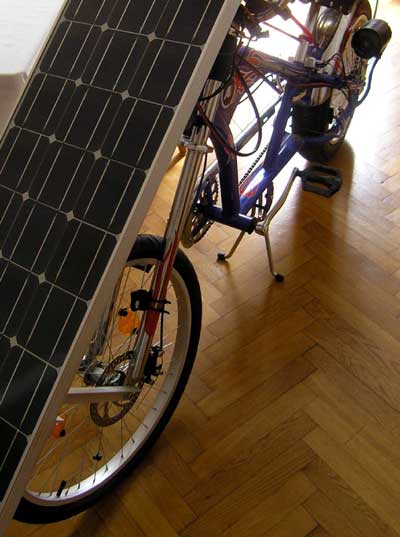
The bicycles has the optimal support structure for a PV-panel. Supercaps were donated by asianmicro and it really works. The power is as calculated but for 16 gramms energy storage don't expect to drive long.
Warning: Supercaps hold little energy but are able to free it in miliseconds. Alway discharge using a 12V bulb before putting it aside. Insulate connectors avoiding short cuts.
2006 Home Photovoltaics and may be some wind later...
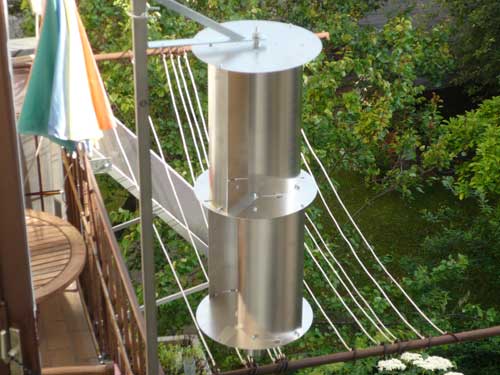
The first attempts were using a south and vertically oriented a-Si 10 panel. Since the thermal collector now resides there, the new 30W a-Si panel is looking west but has got 60° inclination. One lessons were learned the hard way. Distilled water does not rescue every lead acid traction battery if added too late. The configuration consumed energy. Measurements using a device from RC shows only low yields. The age of the a-Si module seems to be contributing. Lately pre-used 21V supercaps taken from car hifi were connected to the 12V system allowing the use of worn batteries.
The Savonius rotor has been only fixed for the photo, since some safety problems could not bee solved.
Warning: Connect the panel to the controller only without sun or cover it. If PV-panels are connected in serie be aware of potential dangerous voltages!
2006 Solar Thermal
The first test werde done using radiators, covered by a thin-wall sheet and direct flows through - yes this resulted in black feet. Later a heat exchanger of a gas fired heating and hot water furnace was added, the pump is operated by a temperature controlled device. Now the system sits with a new solar collector and a small expansion system on the primary side and a thermostat controlled cold water blend on the secondary side to be refurbished.
Warning: Water may boil if there is not enough pressure nor circulation.
2008 Ultralight Battery Electric Vehicle
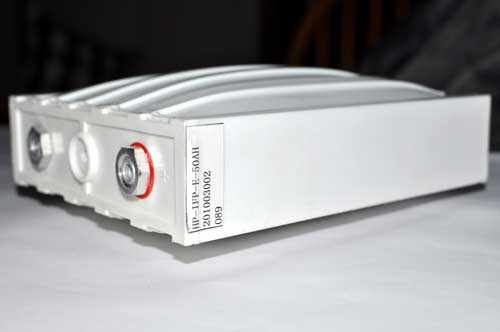
The ebay find from a French manufacturer had worn out LA-batteries, later replaced by LiFePO4 with half capacity. This improved joy of riding but also increased COG. Unfortunately the BMS comes too late for them... It is time to exchange the DC motor to PMSM and add a conditioned battery pack but may be waiting a few years, since buying a new BEV will be the better solution. The vehicle should be a little bigger though, but not heavier (210kg).
Warning: Riding a ballasted ultraligh BEV makes fun, but fasten allways your seatbelt, just in case...
2008-2010 Mobile Photovoltaics
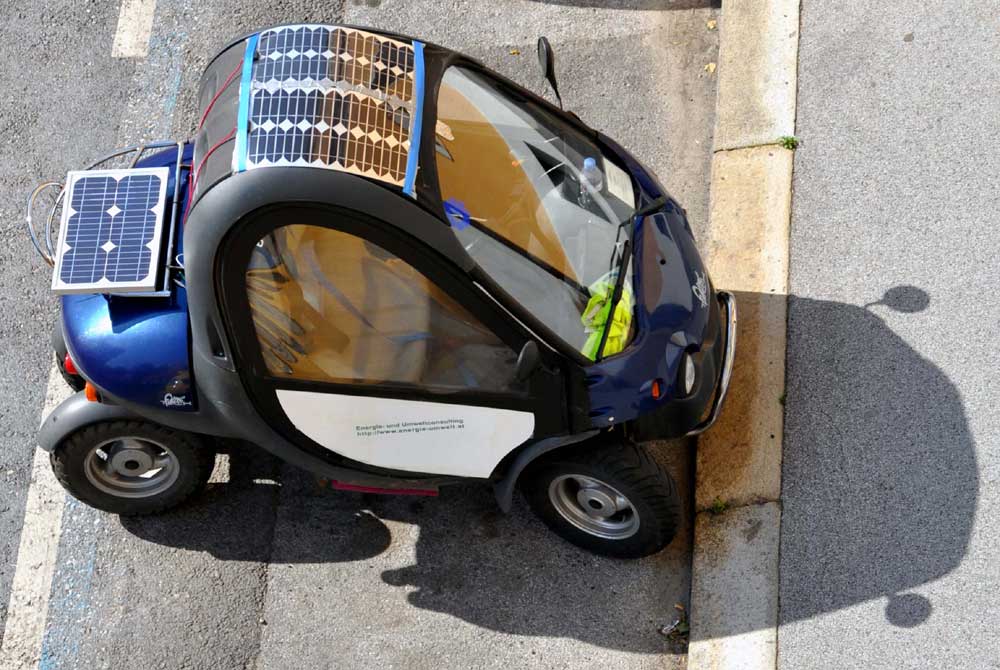
Curved roofs of cars form a good basis for harvesting from the summer sun. Three 12-modules connected in series provide enough voltage/power to charge the pack a little. The flexible c-Si cells turned out to be semi-flexible but anyhow work. In-string MPPT's of the reqired size are to expensive but are needed if modules are shaded.
Warning: PV-cells conected in serie may create dangerous voltages. Use charging controllers or diodes.
2000-2010 Pimp IKEA lamps
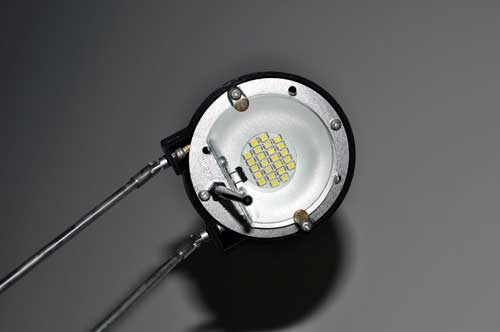
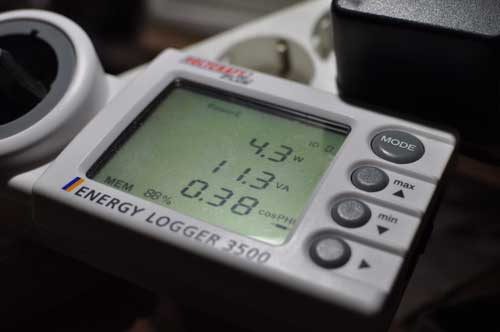
Replacing the heavy iron 12V transformers of halogen lamps by effciient switched 12V transformers helped to cut the standby losses but the better solution is always to switch on the 230V side. Recently LED-arrays became affordable and - surprise - they do work with the old AC transformer. Also the consumption has now been cut down significantly from approximately 24W to 4W.
Warning: Disconnect the lamps from the power grid before disassembling. If you decide to keep the halogen bulb (may be because of the LED array requiring DC voltage)- mount the protective glass before switching it on. When measuring the consumption consider a meter taking cos phi seriously.
2010 Air to Air Heat Recovery Unit
The idea was to use the inner cover of the 100 year old roller shutter housing over the window as basis for a venting and heat recovery unit. This way drilling through half meter thik walls would be avoided. Some solutions were tested using heat exchangers but also Ljungström type heat recovery. Two problems are still to be solved:
There will be air shortcut with one exhaust and one inlet stream
Venting creates noise - PC-type blowers are quiet but not strong enough. Blowers in the 10W range would be needed.
Warning: Don't use mechanical venting changing the internal air pressure if you have open fire or furnaces in the room or flat.
2012 Solar Air Heater
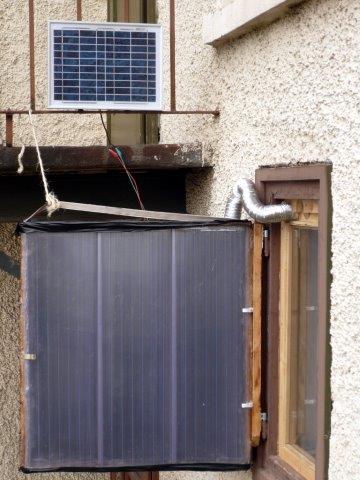
The idea was to replace the folding shutter of an bathroom windows by an hot air collector. The collector has an opening at the bottom and black rubber foam insulation at the interior. The opaque panels are glued to the collector using silicone. The PV-panel drivig the fan is outside the collector for better cooling/efficiency and because a-Si is not available at the right commercial conditions.
Warning: Don't close the openings when the sun is strong, check out that no polluted air is entering your rooms (VOC from the insulation).
2013 Controlled 12V Plugs
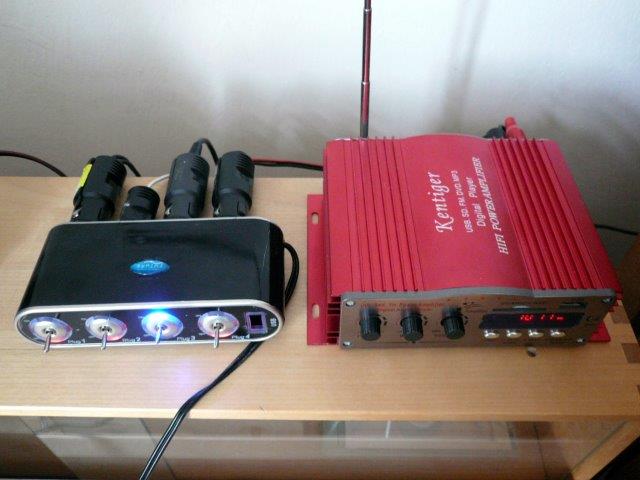
The idea was to replace the cigarette lighter receptables via DIN/Hella receptables for better contact. The new 12V radio allows to play from data storage or act as amplifier. The energy efficiency of the radio is not as good as simple amps but much better compared to multimedia devices unning on 230V. The next step is to get rid of the amplifier at all forwatching TV. For this purpose the internal speakers are connected to external speakers, having a 2 way switch.
Warning: Don't work with wires connected to 12V. Always fuse the connection to the battery. Use fused plugs if necessary. Avoid joint mass with devices operated on different power sources. This joint mass may be the speakers connected!
2013 Air layering destructing lamp
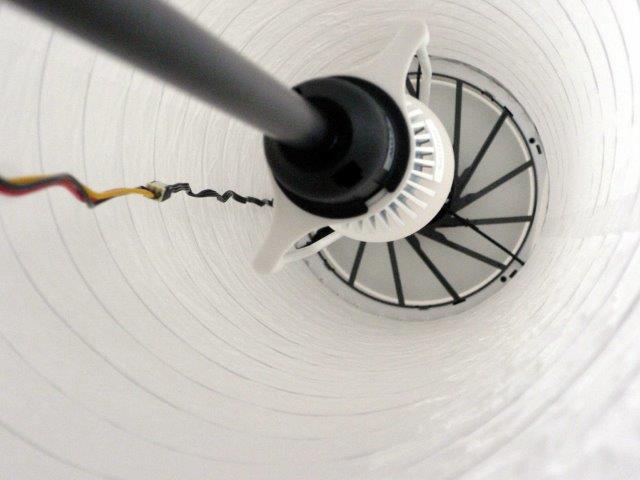
The idea was to use an ambient light and equip it with a fan. The lamp was produced by IKEA and may only support an light 12V fan. The air is pushed downwards. This contributes to a better energy efficiency in winter because of the destruction of the thermal layer. You will have less gradients between floor and ceiling. Extending the height is envisaged.
Warning: Don't connect to 230V, leave the wiring intact. Use only fused 12V for experimenting.